Fluid Machines
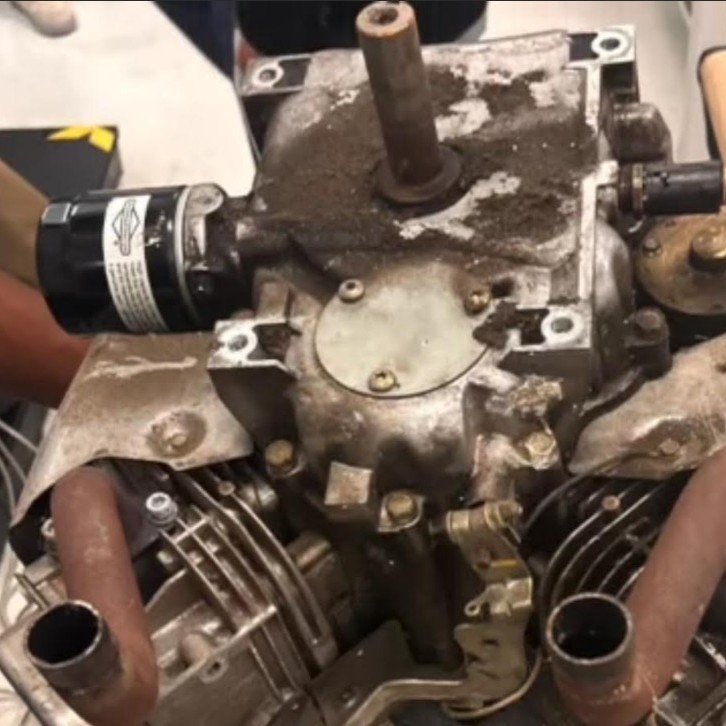
This project was about examining a fluid-mechanical system closely to understand the physical underpinnings of the engineering of the device. We were given equipment to help take it apart, and assisted in identifying the fluid-mechanical components. The purpose of the project was about discovery and understaning the workings of our given machine. Our team of, Group UFO, was tasked with dissecting a Briggs & Stratton V2 Engine.
Fluid-Mechanical Dissection
Quantitative Calculations & Arguments considered while dissecting:
- Would the system work if it were bigger?
- If holes were bigger or smaller?
- If pipes were straighter or more curved?
- If surfaces were rougher or smoother?
- If the Reynolds number were bigger or smaller?
- If the working fluid (water, air, maple syrup, toothpaste, gasoline, oil, honey, oatmeal) were different from the expected working fluid?
- A description of what the Reynolds number is, how it is properly defined for the system, and what range of Reynolds number works. For fast flows the Mach number is likely also relevant.
- A scale drawing and meaningfully drawn streamlines that illustrate flow, direction, regions of acceleration and high pressure, locations of separation, etc.
Technologies Used: Audio-Visual Recording Tools, V2 Engine, Hand Tools
Back to Projects